
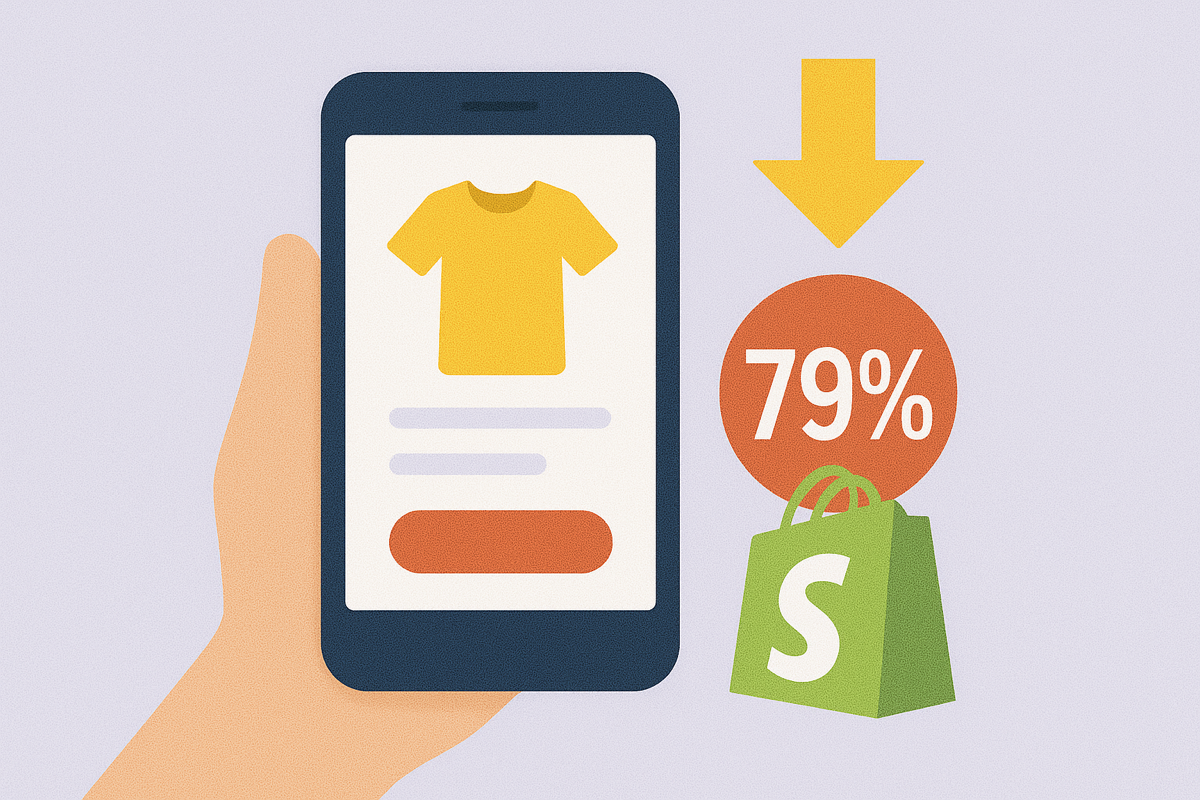
📱 The Mobile Commerce Crisis: While mobile traffic accounts for 79% of all ecommerce visits, most Shopify stores convert mobile visitors at less than half the rate of desktop users. This represents billions in lost revenue that could be captured with proper mobile commerce optimization.
🚀 Ready to fix your mobile conversion problem? Get expert mobile optimization from certified Shopify professionals who’ve helped hundreds of stores double their mobile conversion rates.
The mobile commerce revolution is no longer coming—it’s here, and it’s reshaping how customers shop online. As certified Shopify Experts who’ve optimized hundreds of mobile stores, we’ve witnessed firsthand the dramatic impact that proper mobile commerce optimization can have on revenue. Yet despite mobile devices generating the majority of ecommerce traffic, most Shopify stores are hemorrhaging potential sales due to poor mobile user experience.
In this comprehensive guide, you’ll discover why your mobile traffic isn’t converting, the exact strategies top-performing stores use to capture mobile revenue, and the step-by-step roadmap to transform your Shopify mobile experience. Whether you’re losing sales to mobile bounce rates or struggling with mobile page speed, these proven mobile optimization techniques will help you unlock the full potential of your mobile commerce strategy.
The Mobile Commerce Reality: Numbers That Demand Action
The statistics surrounding mobile commerce in 2025 tell a compelling story that every Shopify store owner needs to understand. Mobile commerce optimization isn’t just an option—it’s become a business imperative for survival and growth.
Mobile Traffic Dominance vs. Conversion Gaps
Current data reveals a stark disconnect between mobile traffic volume and mobile conversion rates. While mobile devices account for 79% of all ecommerce traffic, the average mobile conversion rate hovers around 1.53%, compared to desktop conversion rates of 3.91%. This disparity represents massive untapped revenue potential for Shopify store owners.
The mobile shopping behavior has fundamentally shifted consumer expectations. Mobile users expect instant loading, seamless navigation, and frictionless checkout experiences. When these expectations aren’t met, they abandon their shopping journey without hesitation—often permanently.
Consider this: if your Shopify store receives 10,000 monthly visitors with 79% on mobile devices, you’re getting 7,900 mobile visitors. With an average mobile conversion rate of 1.53%, you’re only converting 121 mobile customers. However, if you optimized your mobile experience to achieve a 3% conversion rate (achievable with proper optimization), you’d convert 237 mobile customers—nearly doubling your revenue from the same traffic.
The Cost of Mobile Optimization Neglect
The financial impact of poor mobile user experience extends beyond immediate conversion losses. Mobile users who have negative experiences are 52% less likely to engage with your brand in the future, creating long-term revenue consequences that compound over time.
⚡ Speed Kills Mobile Conversions: Every second of mobile page load time reduces conversions by 20%. Get professional mobile speed optimization to stop losing sales to slow loading times.
Google’s research shows that 53% of mobile users abandon sites that take longer than 3 seconds to load. For Shopify stores, this translates to immediate revenue loss and reduced search engine rankings, as page speed is a critical ranking factor for mobile search results.
Why Mobile Shopify Traffic Isn’t Converting: The Root Causes
Understanding why mobile visitors aren’t converting is the first step toward fixing the problem. Through extensive analysis of mobile commerce performance across hundreds of Shopify stores, we’ve identified the primary conversion killers that prevent mobile success.
Mobile Page Speed: The Silent Conversion Killer
Mobile page speed remains the most critical factor affecting mobile conversion rates. Despite the importance of speed, many Shopify stores still load painfully slowly on mobile devices, creating immediate friction that drives customers away.
The technical challenges of mobile page speed optimization include image optimization for mobile screens, efficient code delivery for slower mobile connections, app performance impact on mobile devices, and server response time optimization for mobile requests. Each of these elements requires specific attention to achieve optimal mobile performance.
Most Shopify store owners underestimate the complexity of mobile speed optimization. Simply having a responsive theme doesn’t guarantee fast mobile performance. Mobile devices have different processing capabilities, network conditions, and user expectations that require specialized optimization approaches.
Mobile User Interface Design Failures
Poor mobile user interface design creates immediate barriers to conversion. Common mobile design issues include buttons that are too small for mobile touch interaction, navigation menus that are difficult to use on small screens, product images that don’t display well on mobile devices, and text that’s too small to read comfortably on mobile screens.
Mobile-first design principles must guide every aspect of your Shopify store’s user interface. This means designing for mobile first, then scaling up to desktop, rather than the reverse approach that many stores still use.
Touch-friendly design elements are crucial for mobile success. Mobile users interact with your store using their fingers, not a precise mouse cursor. This fundamental difference requires larger buttons, increased spacing between clickable elements, and intuitive gesture-based navigation.
Complicated Mobile Checkout Processes
The mobile checkout experience often becomes the final barrier preventing conversions. Complex checkout processes that work adequately on desktop can become completely unusable on mobile devices.
Mobile checkout optimization requires streamlined form fields, guest checkout options, mobile payment integration (Apple Pay, Google Pay), auto-fill capabilities for faster completion, and progress indicators to reduce checkout abandonment. Each additional step in the mobile checkout process increases abandonment rates exponentially.
Mobile Commerce Trends Shaping 2025
Staying ahead of mobile commerce trends is essential for maintaining competitive advantage. The mobile shopping landscape continues evolving rapidly, with new technologies and user behaviors reshaping customer expectations.
Progressive Web Apps (PWAs) for Shopify
Progressive Web Apps represent the future of mobile commerce, combining the best features of mobile websites and native apps. PWAs offer app-like experiences without requiring app store downloads, making them ideal for Shopify stores seeking to improve mobile engagement.
PWA benefits for Shopify stores include faster loading speeds through service worker caching, offline browsing capabilities for improved user experience, push notification support for customer re-engagement, and improved mobile search rankings through better performance metrics.
Implementing PWA functionality on Shopify stores requires technical expertise but delivers significant mobile conversion improvements. Users experience instant loading, smooth navigation, and app-like interactions that encourage longer browsing sessions and higher conversion rates.
Voice Commerce and Mobile Integration
Voice commerce is rapidly becoming mainstream, with mobile devices serving as the primary interface for voice shopping. Optimizing your Shopify store for voice search requires understanding how customers use voice commands to find and purchase products.
Voice search optimization strategies include natural language keyword optimization, featured snippet optimization for voice results, local SEO optimization for “near me” voice searches, and conversational content that matches voice search patterns.
Augmented Reality Mobile Shopping
Augmented reality (AR) technology is transforming mobile shopping by allowing customers to visualize products in their environment before purchasing. Shopify’s AR capabilities enable stores to provide immersive mobile shopping experiences that reduce return rates and increase customer confidence.
AR implementation for mobile commerce includes 3D product visualization, virtual try-on capabilities, size and fit visualization, and interactive product demonstrations. These features particularly benefit fashion, furniture, and home decor categories where customers need to visualize products before buying.
The Mobile-First Shopify Optimization Strategy
Implementing a comprehensive mobile-first optimization strategy requires systematic attention to every aspect of the mobile user experience. This approach prioritizes mobile performance and usability, ensuring that your Shopify store delivers exceptional mobile experiences.
Mobile Performance Optimization
Mobile performance optimization forms the foundation of successful mobile commerce. Without fast loading speeds, even the best mobile design and user experience will fail to convert visitors into customers.
🔍 Boost Mobile Performance: Professional mobile optimization can improve loading speeds by 50-70%. Get a mobile speed optimization audit to identify your biggest performance bottlenecks.
Key mobile performance optimization techniques include image compression and format optimization (WebP, AVIF), critical CSS delivery for above-the-fold content, JavaScript optimization and lazy loading, server-side rendering for faster initial page loads, and content delivery network (CDN) optimization for global speed improvements.
Mobile performance metrics require continuous monitoring and optimization. Core Web Vitals specifically measure mobile user experience, with Largest Contentful Paint (LCP), First Input Delay (FID), and Cumulative Layout Shift (CLS) directly impacting both user experience and search engine rankings.
Mobile User Experience Design
Creating exceptional mobile user experiences requires understanding how mobile users interact with ecommerce sites differently than desktop users. Mobile shoppers are often multitasking, browsing in shorter sessions, and seeking quick, efficient shopping experiences.
Mobile UX design principles include thumb-friendly navigation with easily tappable elements, simplified menu structures that work on small screens, prominent search functionality for quick product discovery, clear visual hierarchy that guides users toward conversion actions, and intuitive product filtering and sorting options.
Mobile product page optimization requires special attention to product images, descriptions, and calls-to-action. Mobile users need to quickly understand product benefits and pricing without excessive scrolling or zooming.
Mobile Conversion Rate Optimization
Mobile conversion rate optimization focuses specifically on removing friction from the mobile buying process. This requires testing and optimizing every step of the mobile customer journey, from initial landing to final purchase confirmation.
Critical mobile CRO elements include mobile-optimized product pages with clear value propositions, streamlined mobile navigation that reduces clicks to purchase, mobile-specific call-to-action buttons with optimal sizing and placement, trust signals displayed prominently on mobile screens, and social proof integration that builds confidence on mobile devices.
📈 Maximize Mobile Conversions: Expert mobile CRO can increase conversion rates by 40-60%. Get professional mobile conversion optimization to transform your mobile performance.
Mobile A/B testing requires consideration of mobile-specific variables like touch interaction, screen orientation, and mobile browsing patterns. Testing mobile-specific elements often reveals insights that don’t apply to desktop optimization.
Mobile SEO: Capturing Mobile Search Traffic
Mobile SEO has become critical for Shopify store success as Google’s mobile-first indexing means your mobile site version determines your search rankings. Optimizing for mobile search requires specific strategies that address mobile user search behavior and technical requirements.
Mobile-First Indexing Optimization
Google’s mobile-first indexing means the mobile version of your Shopify store is the primary version used for ranking and indexing. This shift requires ensuring that your mobile site contains all the content, structured data, and optimization elements present on your desktop site.
Mobile-first indexing optimization includes ensuring mobile content parity with desktop versions, implementing structured data on mobile pages, optimizing mobile page titles and meta descriptions, maintaining mobile-friendly URL structures, and ensuring mobile navigation includes all important pages.
Mobile technical SEO requires attention to mobile-specific factors like mobile page speed optimization, mobile-friendly design validation, mobile usability error resolution, and mobile-specific crawling and indexing issues.
Local Mobile Search Optimization
Mobile devices drive the majority of local searches, making local SEO optimization crucial for Shopify stores with physical locations or local service areas. Mobile users often search with immediate purchase intent when looking for local businesses.
Local mobile SEO strategies include Google My Business optimization for mobile search, local keyword optimization with mobile search patterns, mobile-friendly local landing pages, and location-based mobile advertising integration.
🎯 Dominate Mobile Search: Professional mobile SEO drives 40%+ organic mobile traffic growth. Get expert mobile SEO optimization to capture more mobile customers.
Advanced Mobile Commerce Strategies
Advanced mobile commerce strategies separate industry leaders from competitors. These sophisticated approaches require technical expertise but deliver significant competitive advantages in mobile conversion rates and customer experience.
Mobile App Integration and PWAs
Progressive Web Apps (PWAs) bridge the gap between mobile websites and native apps, providing app-like experiences without app store requirements. For Shopify stores, PWAs offer superior mobile performance and engagement compared to traditional mobile websites.
PWA implementation benefits include offline browsing capabilities that work without internet connections, push notification support for customer re-engagement, home screen installation for easy access, improved loading speeds through service worker caching, and enhanced mobile user experience with smooth animations and transitions.
Native mobile app development may be appropriate for larger Shopify stores with significant mobile traffic and resources for app development and maintenance. Native apps provide the ultimate mobile experience but require substantial investment and ongoing maintenance.
Mobile Payment Optimization
Mobile payment optimization reduces checkout friction and improves mobile conversion rates. Mobile users expect quick, secure payment options that don’t require extensive form filling or account creation.
Advanced mobile payment strategies include one-click payment implementation (Apple Pay, Google Pay, Shop Pay), digital wallet integration for faster checkout, mobile-optimized payment forms with auto-complete, biometric authentication support for secure payments, and cryptocurrency payment options for tech-savvy mobile users.
Mobile payment security remains paramount for building customer trust. Implementing advanced security measures while maintaining checkout simplicity requires careful balance and expert implementation.
Mobile Personalization and AI
Artificial intelligence enables sophisticated mobile personalization that improves user experience and conversion rates. Mobile personalization leverages user behavior data to create customized shopping experiences that feel tailored to individual preferences.
AI-powered mobile personalization includes personalized product recommendations based on mobile browsing behavior, dynamic content optimization for mobile screens, personalized mobile push notifications, intelligent mobile search and filtering, and behavioral trigger-based mobile marketing automation.
Mobile Analytics and Performance Monitoring
Comprehensive mobile analytics enable data-driven optimization decisions and continuous improvement of mobile commerce performance. Understanding mobile-specific metrics and user behavior patterns is essential for successful mobile optimization.
Essential Mobile Commerce Metrics
Mobile-specific metrics provide insights that general analytics might miss. These metrics help identify mobile optimization opportunities and track the impact of mobile improvements on business performance.
Critical mobile metrics include mobile conversion rate by traffic source, mobile page speed and Core Web Vitals, mobile bounce rate and session duration, mobile cart abandonment rate, mobile customer lifetime value, and mobile search rankings and organic traffic.
Mobile user behavior analysis reveals how customers interact with your Shopify store on mobile devices. This includes touch interaction patterns, mobile navigation preferences, mobile product discovery methods, and mobile purchase decision factors.
Mobile A/B Testing Strategies
Mobile A/B testing requires special consideration of mobile-specific variables and user behavior patterns. Mobile tests should focus on elements that significantly impact mobile user experience and conversion rates.
Effective mobile A/B testing includes mobile-specific button sizes and placement, mobile navigation and menu designs, mobile product page layouts, mobile checkout flow variations, and mobile page loading and interaction designs.
Mobile test duration and sample sizes require adjustment for mobile traffic patterns and conversion rates. Mobile users may behave differently across various times, locations, and contexts, requiring longer testing periods for statistical significance.
Common Mobile Optimization Mistakes That Kill Conversions
Learning from common mobile optimization mistakes can save time, resources, and lost revenue. These frequent errors prevent Shopify stores from achieving optimal mobile performance and conversion rates.
Ignoring Mobile Page Speed
Many Shopify store owners underestimate the critical importance of mobile page speed for conversion rates. Slow mobile loading times create immediate friction that drives customers away before they can browse products or make purchases.
Mobile speed optimization requires specialized attention to mobile-specific performance factors including mobile image optimization, mobile-friendly theme selection, mobile app performance monitoring, and mobile server response optimization.
Poor Mobile Navigation Design
Complex desktop navigation systems often translate poorly to mobile screens, creating confusion and frustration for mobile users. Mobile navigation must be designed specifically for touch interaction and small screen constraints.
Common mobile navigation mistakes include dropdown menus that don’t work on touch screens, buttons that are too small for finger tapping, navigation elements that are difficult to find on mobile screens, and menu systems that require too many taps to reach important pages.
Neglecting Mobile Checkout Optimization
Desktop checkout processes often become unusable on mobile devices, leading to high mobile cart abandonment rates. Mobile checkout requires streamlined processes designed specifically for mobile user behavior and constraints.
Mobile checkout optimization failures include forms with too many fields for mobile completion, payment processes that don’t work well on mobile devices, checkout steps that are confusing on small screens, and lack of mobile payment options like Apple Pay or Google Pay.
📱 Transform Your Mobile Performance Today
Don’t let poor mobile optimization continue costing you sales. Our certified Shopify Experts have helped hundreds of stores dramatically improve their mobile conversion rates and revenue.
Get a comprehensive mobile optimization audit that includes:
- Mobile page speed analysis and optimization recommendations
- Mobile user experience evaluation and improvement strategy
- Mobile conversion rate optimization opportunities
- Mobile SEO audit and optimization roadmap
- Mobile-specific growth strategy tailored to your business
Tools and Resources for Mobile Commerce Success
The right tools and resources accelerate mobile optimization efforts and provide insights necessary for continuous improvement. These carefully selected tools address the most critical aspects of mobile commerce optimization.
Mobile Performance Testing Tools
Google PageSpeed Insights for mobile performance analysis, GTmetrix for detailed mobile loading analysis, WebPageTest for mobile speed testing from various locations, Lighthouse for mobile performance auditing, and mobile-specific performance monitoring tools for ongoing optimization.
Mobile User Experience Testing
Google Mobile-Friendly Test for mobile usability validation, Hotjar for mobile user behavior heatmaps, Crazy Egg for mobile click tracking analysis, UserTesting for mobile user experience feedback, and mobile device testing labs for cross-device compatibility validation.
Mobile Analytics and Optimization
Google Analytics 4 with mobile-specific reporting, Google Search Console for mobile search performance, mobile conversion tracking tools, mobile A/B testing platforms, and mobile-specific customer journey analysis tools.
Frequently Asked Questions About Mobile Commerce Optimization
Why is mobile conversion rate lower than desktop?
Mobile conversion rates are typically lower due to slower loading speeds, poor mobile design, complicated checkout processes, and smaller screens that make navigation difficult. However, with proper mobile optimization, stores can achieve mobile conversion rates that match or exceed desktop performance.
What is a good mobile conversion rate for Shopify stores?
A good mobile conversion rate for Shopify stores ranges from 1.5% to 3%, with top-performing stores achieving 4-6% through proper mobile optimization. Industry averages vary by category, but mobile conversion rates below 1% indicate significant optimization opportunities.
How can I improve my Shopify mobile page speed?
Improve mobile page speed by optimizing images for mobile screens, minifying CSS and JavaScript code, using a fast mobile-optimized theme, reducing app usage that slows mobile performance, implementing lazy loading for images, and optimizing server response times for mobile requests.
Should I build a mobile app for my Shopify store?
Most Shopify stores should focus on mobile website optimization before considering native apps. Progressive Web Apps (PWAs) provide app-like experiences without development costs. Native apps are best for stores with high mobile traffic, repeat customers, and resources for ongoing app maintenance.
How important is mobile SEO for Shopify stores?
Mobile SEO is critical for Shopify stores as Google uses mobile-first indexing, meaning your mobile site determines search rankings. Mobile SEO optimization can drive 40-60% of total organic traffic for well-optimized stores.
Your Mobile Commerce Success Action Plan
Transforming your Shopify store’s mobile performance requires systematic implementation of proven mobile optimization strategies. Success comes from addressing mobile optimization holistically rather than making piecemeal improvements.
Start by conducting a comprehensive mobile audit of your current store performance. Identify the biggest mobile optimization opportunities and prioritize improvements that will have the most immediate impact on mobile conversion rates and user experience.
Focus on mobile page speed optimization first, as this foundational element affects every other aspect of mobile performance. Without fast mobile loading speeds, even excellent mobile design and user experience will fail to convert visitors into customers.
Implement mobile-first design principles throughout your store, ensuring that every element works optimally on mobile devices. This includes navigation, product pages, checkout process, and customer service features.
Monitor mobile performance continuously using mobile-specific analytics and testing. Mobile optimization is an ongoing process that requires regular attention and refinement based on user behavior data and performance metrics.
🚀 Ready to Capture Your Mobile Revenue?
Stop losing sales to poor mobile optimization. Our certified Shopify Experts specialize in mobile commerce optimization and have helped hundreds of stores dramatically improve their mobile conversion rates.
Remember, mobile commerce optimization isn’t a one-time project—it’s an ongoing competitive advantage that compounds over time. Every day you delay mobile optimization, you’re losing potential revenue to competitors who provide better mobile experiences.
The mobile commerce opportunity in 2025 is massive, but it requires strategic action and expert implementation. Your mobile customers are ready to buy—make sure your Shopify store is ready to sell.
About Speed Boostr: We’re certified Shopify Experts specializing in mobile commerce optimization, mobile performance improvement, and mobile conversion rate optimization. Our team has helped hundreds of merchants capture mobile revenue through proven mobile optimization strategies and technical excellence.
Related Articles:
- Complete Shopify Page Speed Optimization Guide
- Advanced Shopify Conversion Rate Optimization Strategies
- Shopify SEO Optimization for Higher Rankings
Services: Expert Shopify Development | Mobile Speed Optimization | Mobile Conversion Rate Optimization | Mobile SEO Services