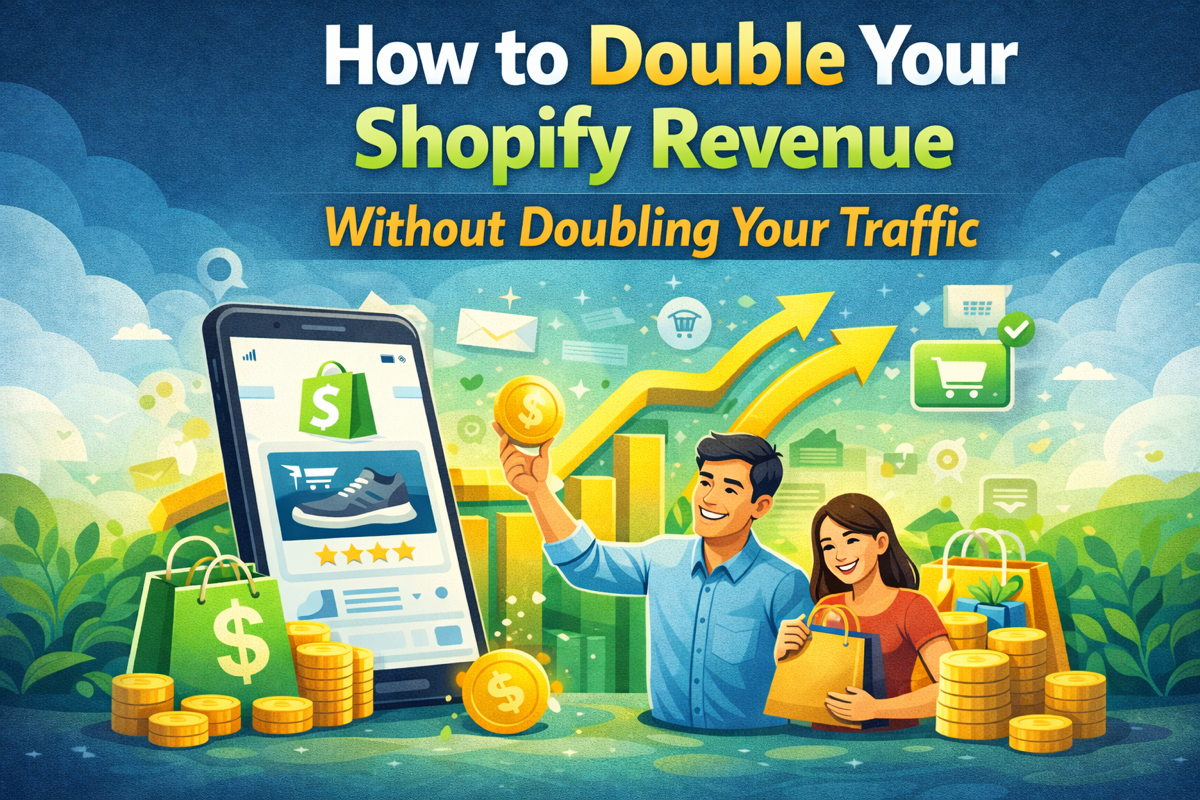
📈 The $56,000 Discovery: Last year, one of our clients was spending $4,200 monthly on Facebook ads to drive traffic to their Shopify store. Despite decent visitor numbers, they were stuck at $47K in annual revenue. Instead of recommending they double their ad budget, we focused on conversion optimization. Six months later, their revenue hit $103K annually with the exact same traffic levels. The difference? We fixed eight critical conversion bottlenecks that were costing them thousands every month.
🎯 Here’s the truth most store owners don’t want to hear: You probably don’t have a traffic problem. You have a conversion problem. And while traffic is expensive, optimization is profitable.
Most Shopify merchants make the same costly mistake: they obsess over driving more visitors to their store while ignoring the money already sitting on the table. The average Shopify store converts at just 1.4%, meaning 98.6% of visitors leave without buying. That’s not a traffic shortage; that’s a conversion crisis.
As certified Shopify Experts who specialize in revenue optimization, we’ve seen this pattern hundreds of times. Store owners pour money into ads, influencer partnerships, and SEO campaigns while their actual store bleeds potential customers through preventable conversion leaks. The good news? Fixing these issues delivers immediate results without spending another dollar on traffic.
In this guide, you’ll discover eight proven strategies to increase Shopify revenue by maximizing the value of every visitor you already have. These aren’t theoretical tactics but battle-tested methods that have helped our clients double Shopify sales without doubling their marketing budgets.
The Math Behind Conversion-Focused Growth
Before diving into specific tactics, let’s look at why conversion optimization delivers such powerful results compared to traffic scaling.
Imagine your store currently gets 10,000 monthly visitors with a 1.5% conversion rate and a $65 average order value. That’s 150 sales and $9,750 in monthly revenue.
Now compare two growth paths:
Path 1 – Traffic Scaling: Double your traffic to 20,000 visitors (keeping conversion rate and AOV the same). You’ll generate 300 sales and $19,500 monthly revenue. Cost? Typically $2,000-$5,000+ in additional monthly ad spend.
Path 2 – Conversion Optimization: Keep your 10,000 visitors but increase conversion rate to 3% and AOV to $80. You’ll generate 300 sales and $24,000 monthly revenue. Cost? A fraction of traffic scaling, with results that compound over time.
The conversion-focused path delivers 23% more revenue than traffic scaling while costing significantly less. Even better, once you’ve optimized conversions, any traffic increases multiply your results even further.
This is why smart merchants prioritize Shopify revenue optimization before traffic scaling. You’re essentially making every marketing dollar work harder by ensuring more visitors actually buy when they reach your store.
Strategy 1: Optimize Your Product Pages for Maximum Impact
Your product pages are where buying decisions happen. Small improvements here create outsized results because they affect every single product view.
Start with your product images. Professional, high-quality photos from multiple angles dramatically increase trust and reduce purchase hesitation. Include lifestyle shots showing your products in use, not just white background studio shots. Our data shows stores with 5+ product images per item convert 28% better than those with only 1-2 images.
Your product descriptions need to sell, not just inform. Focus on benefits over features, addressing the specific problems your products solve. Instead of “Made from 100% organic cotton,” write “Sleep cooler and wake up refreshed with breathable organic cotton that regulates temperature naturally.”
Add urgency elements strategically. Limited stock notifications (“Only 3 left in stock”), time-sensitive offers, and social proof (“127 people bought this today”) all encourage faster purchase decisions. Just ensure these elements are genuine; fake urgency destroys trust faster than anything.
💡 Quick Win: Add a size guide, FAQ section, and detailed shipping information directly on product pages. Every question customers have to hunt for elsewhere is a conversion opportunity lost.
Strategy 2: Master the Art of Cart Abandonment Recovery
The average cart abandonment rate across ecommerce is 70%. That means for every 10 people who add items to their cart, seven leave without buying. Recovering even a fraction of these lost sales can dramatically increase Shopify revenue.
Implement a three-email abandoned cart sequence:
Email 1 (1 hour later): Simple reminder with cart contents. Subject line: “You left something behind.” No discount yet, just a friendly nudge reminding them what they were about to buy.
Email 2 (24 hours later): Address common objections like shipping costs, return policies, and product quality. Include customer reviews and trust signals. Consider offering free shipping as an incentive if your margins allow.
Email 3 (3 days later): Final attempt with a time-limited discount code (10-15% off). Create urgency by making the offer expire in 24-48 hours.
🚀 Pro Tip: Don’t start with discounts. Our testing shows 30-40% of abandoned carts convert from the first reminder email alone without any incentive. Save discounts for the final touchpoint.
Beyond email sequences, implement exit-intent popups that trigger when customers are about to leave your cart page. A simple “Wait! Get 10% off your order” popup can recover 5-8% of otherwise-lost sales.
Strategy 3: Increase Average Order Value Through Strategic Bundling
Raising your average order value is one of the fastest ways to grow Shopify business without acquiring more customers. Small AOV increases compound significantly over time.
Product bundling works because it simplifies decision-making while providing perceived value. Instead of customers picking individual items, offer pre-selected bundles at a slight discount (10-15% off). A skincare store might bundle cleanser, toner, and moisturizer as a “Complete Routine Kit.” Customers get convenience and savings; you get higher order values.
Implement strategic upsells at checkout. “Frequently bought together” recommendations based on cart contents convert exceptionally well. Someone buying a yoga mat is likely interested in blocks, straps, or resistance bands. Present these as one-click add-ons during checkout.
Set minimum order thresholds for free shipping. “Add $15 more for free shipping” messages encourage customers to add extra items. This tactic works because customers hate paying for shipping and will often add products they were considering anyway to reach the threshold.
Volume discounts incentivize bulk purchases: “Buy 2, get 10% off. Buy 3, get 20% off.” This strategy works particularly well for consumable products or items customers naturally need multiples of.
💰 Real Results: One of our clients in the supplements space implemented product bundles and tiered volume discounts. Their average order value increased from $52 to $78 within three months, a 50% improvement that translated directly to revenue growth.
Strategy 4: Speed Up Your Store for Instant Conversion Gains
Page load speed directly impacts conversion rates in ways most merchants underestimate. Studies consistently show that a one-second delay in load time reduces conversions by 7%. For a store generating $10K monthly, that’s $700 lost every month to slow loading speeds.
Mobile speed matters even more, as mobile shoppers are particularly impatient. Google data shows 53% of mobile visitors abandon sites that take longer than three seconds to load. Since mobile traffic typically represents 60-70% of ecommerce visitors, slow mobile performance is quietly killing your conversion rates.
⚡ Speed Impact: Is slow loading costing you sales? Get professional speed optimization to boost conversions by 20-30% instantly.
Focus on these high-impact speed improvements:
Optimize images by compressing them without quality loss and using next-gen formats like WebP. Images typically account for 50-70% of page weight.
Remove unused apps that slow your store. Every app adds code that increases load time. Audit your apps quarterly and remove anything you’re not actively using.
Minimize third-party scripts from tracking pixels, chat widgets, and review apps. Each external script creates additional loading delays.
Use lazy loading for images below the fold so they only load when customers scroll to them.
Test your speed regularly using Google PageSpeed Insights and focus on improving your mobile performance score first.
Strategy 5: Reduce Friction in Your Checkout Process
Checkout abandonment is where revenue dreams go to die. The average checkout abandonment rate is 25%, meaning one in four customers who start checkout never complete it.
Simplify your checkout flow by reducing required fields to the absolute minimum. Every additional form field decreases completion rates. Ask only for information you truly need for order fulfillment.
Offer guest checkout alongside account creation. Forcing account creation before purchase creates significant friction, particularly for first-time buyers. Let customers complete their purchase first, then invite them to create an account afterward.
Display trust signals throughout checkout: security badges, accepted payment methods, return policy highlights, and customer service contact information. Checkout is when purchase anxiety peaks, so reassure customers they’re making a safe decision.
Show transparent pricing early. Unexpected costs during checkout (especially shipping fees) are the number one reason for cart abandonment. Display shipping costs clearly on product pages or early in the checkout process.
Enable multiple payment options including credit cards, PayPal, Apple Pay, and Google Pay. Payment flexibility removes barriers for different customer preferences.
🎯 Maximize Your Conversions: Professional checkout optimization can recover 15-25% of lost sales. Get a CRO audit to identify your biggest revenue opportunities.
Case Study: We helped a fashion retailer streamline their checkout from seven steps to three, added guest checkout, and displayed all shipping options upfront. Their checkout completion rate increased from 62% to 81%, adding $18K in monthly revenue without changing anything else.
Strategy 6: Leverage Social Proof to Build Trust
Trust is the invisible currency of ecommerce. Without it, even interested visitors won’t buy. Social proof addresses this by showing that other real people have purchased and loved your products.
Customer reviews are non-negotiable. Products with reviews convert 270% better than products without them. Actively request reviews from customers through post-purchase email sequences. Offer small incentives (discount codes for next purchase) to encourage review submission.
Display review counts prominently on product pages and in search results. “4.8 stars from 1,247 reviews” provides powerful social validation that your products deliver on their promises.
Showcase user-generated content like customer photos and videos. Real people using your products carries far more weight than professional product shots. Create hashtags and encourage customers to share their purchases on social media.
Add trust badges and certifications throughout your site: money-back guarantees, secure checkout badges, industry certifications, and press mentions. These signals reduce purchase anxiety and increase perceived legitimacy.
Feature testimonials strategically on high-traffic pages. Video testimonials are particularly powerful, as they’re harder to fake and feel more authentic than text reviews.
Real Numbers: After implementing a comprehensive review strategy, one of our clients went from 23 total reviews across their catalog to 400+ reviews within four months. Their conversion rate increased from 1.8% to 2.7%, a 50% improvement that added $22K in quarterly revenue.
Strategy 7: Implement Strategic Pricing Psychology
How you present prices dramatically affects purchase decisions. Small psychological adjustments to pricing can maximize Shopify profit without actually changing your prices.
Use charm pricing strategically. Prices ending in .99 or .97 convert better than round numbers because they feel significantly cheaper even when the difference is negligible. $49.99 feels substantially less expensive than $50, despite being just one cent different.
Show savings clearly when running promotions. Display both the original price (crossed out) and the sale price together. “Was $79, now $59” quantifies the value customers receive and creates urgency around the limited-time savings.
Anchor pricing works by presenting a higher-priced option first, making your target product seem more reasonable by comparison. Offering a premium version at $199 makes your standard version at $99 feel like a smart, middle-ground choice.
Break down expensive purchases into payment installments. “Just $25/month” feels more accessible than “$300 upfront” even when the total cost is identical. Shop Pay Installments makes this easy to implement.
Remove currency symbols from prices in certain contexts. Research shows prices without dollar signs ($59 vs just 59) create less psychological pain during purchase because they feel less like spending actual money.
Strategy 8: Personalize the Shopping Experience
Generic, one-size-fits-all shopping experiences convert poorly compared to personalized experiences that adapt to individual customer behavior and preferences.
Use browsing history to display relevant product recommendations. If someone’s viewed multiple running shoes, show them running accessories and apparel. Personalized recommendations account for 10-30% of ecommerce revenue for stores that implement them well.
Segment your email list based on purchase behavior and preferences. New customers need different messaging than repeat buyers. High-value customers deserve exclusive offers. Behavioral segmentation can double email marketing ROI.
Create dynamic landing pages for different traffic sources. Visitors from Facebook ads should see content aligned with the ad they clicked. Google shoppers need different messaging than Instagram visitors.
Implement geo-targeting to show location-specific offers, shipping information, and currency. International visitors appreciate seeing prices in their local currency and realistic shipping timelines.
Use retargeting ads that show specific products visitors viewed on your site. Generic retargeting converts at 1-2%, while product-specific retargeting converts at 4-6%.
📊 Data-Driven Growth: Professional revenue optimization combines all these strategies into a comprehensive plan. Work with certified Shopify Experts who’ve helped hundreds of stores double their sales.
Measuring Your Optimization Impact
Tracking the right metrics ensures your optimization efforts actually move the needle on revenue. Focus on these key performance indicators:
Conversion rate by traffic source tells you which channels bring the most qualified visitors. If Instagram converts at 3% but Google converts at 1.2%, you know where to focus improvement efforts.
Average order value trends show whether your bundling and upsell strategies are working. Track AOV monthly and by customer segment.
Cart abandonment rate should decrease as you implement recovery sequences and reduce checkout friction. Benchmark your current rate and set improvement goals.
Customer lifetime value increases as you improve the overall experience and encourage repeat purchases. CLV is the ultimate measure of optimization success.
Return on ad spend improves automatically when conversion rates increase. Your marketing becomes more profitable without changing spend levels.
Use Google Analytics and Shopify’s native analytics to monitor these metrics monthly. Small improvements compound over time, so track trends rather than obsessing over day-to-day fluctuations.
Common Optimization Mistakes to Avoid
Even well-intentioned optimization efforts can backfire when merchants make these common mistakes:
Testing too many changes simultaneously makes it impossible to know what actually worked. Change one variable at a time, measure results, then move to the next optimization.
Copying competitors blindly without understanding your unique audience. What works for other stores may not work for yours. Test everything.
Over-discounting to drive conversions trains customers to wait for sales and erodes profit margins. Use discounts strategically, not as a crutch.
Ignoring mobile experience when 70% of traffic comes from mobile devices. Test your entire purchase flow on actual phones, not just desktop simulators.
Neglecting load speed because it seems technical. Speed optimization typically delivers the highest ROI of any conversion improvement.
Your Revenue Optimization Action Plan
Start implementing these strategies systematically rather than randomly. Here’s a prioritized action plan for the next 90 days:
Month 1: Fix your speed issues and implement abandoned cart email sequences. These deliver the fastest ROI with minimal ongoing effort.
Month 2: Optimize your top-performing product pages and streamline checkout. Focus on your bestsellers first since they receive the most traffic.
Month 3: Implement strategic bundling, social proof, and personalization. These require more setup but deliver compounding long-term benefits.
Track your baseline metrics before starting so you can measure improvement accurately. Most stores see 20-40% revenue increases within 90 days of implementing these strategies.
🔧 Ready to Double Your Revenue?
These eight strategies work, but implementing them correctly requires expertise and time. Our certified Shopify Experts have optimized hundreds of stores, consistently delivering 30-50% revenue increases without increasing traffic.
Get a comprehensive conversion audit that identifies:
- Your biggest conversion bottlenecks
- Quick-win opportunities for immediate revenue gains
- Speed optimization priorities
- Personalized growth roadmap for your specific store
Frequently Asked Questions
How much can I realistically increase my Shopify revenue through conversion optimization?
Most stores see 20-40% revenue increases within 90 days of implementing comprehensive conversion optimization strategies. Our clients typically experience 30-50% revenue growth within six months without increasing traffic levels. The exact results depend on your current conversion rate and how many optimization opportunities exist in your store.
Should I focus on getting more traffic or optimizing conversions first?
Always optimize conversions before scaling traffic. Driving more visitors to a poorly converting store wastes marketing budget. Once you’ve improved your conversion rate, every dollar spent on traffic delivers better returns. Think of it this way: fixing a leaky bucket before adding more water.
What’s the fastest way to increase average order value?
Product bundling and free shipping thresholds deliver the fastest AOV improvements. Implement “frequently bought together” recommendations at checkout and set minimum order values for free shipping. These tactics can increase AOV by 20-50% within weeks with minimal setup required.
How does page speed affect my revenue?
Studies show that a one-second delay in load time reduces conversions by 7%. For a store generating $10,000 monthly, that’s $700 lost every month to slow speeds. Mobile speed matters even more, as 53% of mobile visitors abandon sites taking longer than three seconds to load.
What conversion rate should I aim for?
The average Shopify store converts at 1.4%, but well-optimized stores regularly achieve 3-5% conversion rates. Focus on beating your own baseline rather than industry averages. Even improving from 1.5% to 2.5% represents a 67% increase in sales from the same traffic.
Final Thoughts: Traffic Is Expensive, Optimization Is Profitable
The ecommerce landscape has become increasingly competitive and expensive. Customer acquisition costs rise every year as more merchants compete for the same audiences on advertising platforms.
Smart merchants recognize that maximizing revenue from existing traffic is more sustainable than constantly chasing new visitors. Every percentage point improvement in conversion rate directly increases your bottom line while making all your marketing more profitable.
The strategies outlined in this guide represent the difference between stores that struggle to break even on their marketing and stores that scale profitably. Our clients consistently report that conversion optimization delivers better ROI than any other growth investment they make.
Remember that optimization is ongoing, not one-time. Markets evolve, customer expectations change, and new opportunities emerge. The most successful Shopify stores continuously test, measure, and refine their approach.
🚀 Stop Leaving Money on the Table
Your store is already generating traffic. Make every visitor count by optimizing for conversions instead of just driving more traffic. Our team specializes in turning browsers into buyers.
The choice is clear: spend thousands chasing more traffic, or invest hundreds optimizing what you already have. Our clients who chose optimization are now scaling profitably while their competitors burn through ad budgets.
Your doubled revenue is waiting. The question is whether you’ll keep chasing traffic or start converting it.